Rome is one of those cities you could visit again and again without ever getting tired of it. Between its ancient ruins, monumental squares, fountains, churches, and charming little streets, the Italian capital is a genuine open-air museum. History is everywhere here, and sometimes all it takes is turning a street corner to stumble upon a monument that’s centuries old.
We spent 3 days in Rome with our kids in spring, and it’s a capital we particularly love. Rome is very touristy and some of the must-see sights can get extremely crowded. But despite the crowds, you still feel good there. It’s a city where you naturally take the time to stroll, stop on a square, have a coffee on a terrace, or simply watch the life going on around you. In Rome, you really feel that famous Italian dolce vita!
And then there’s the food! Of all the cities we’ve discovered in Italy, Rome is probably where we ate the best. Carbonara, cacio e pepe, pizza al taglio, supplì, maritozzo, gelato… We found so many great addresses and a few real food gems that we’ll also share with you in this guide.
So, what should you see in Rome in 3 days? Which monuments and places should you absolutely not miss? After exploring the city as a family, here are all the must-see sights in Rome, our tips for organizing your visits, and our favorite addresses to make the most of your stay in the Italian capital.
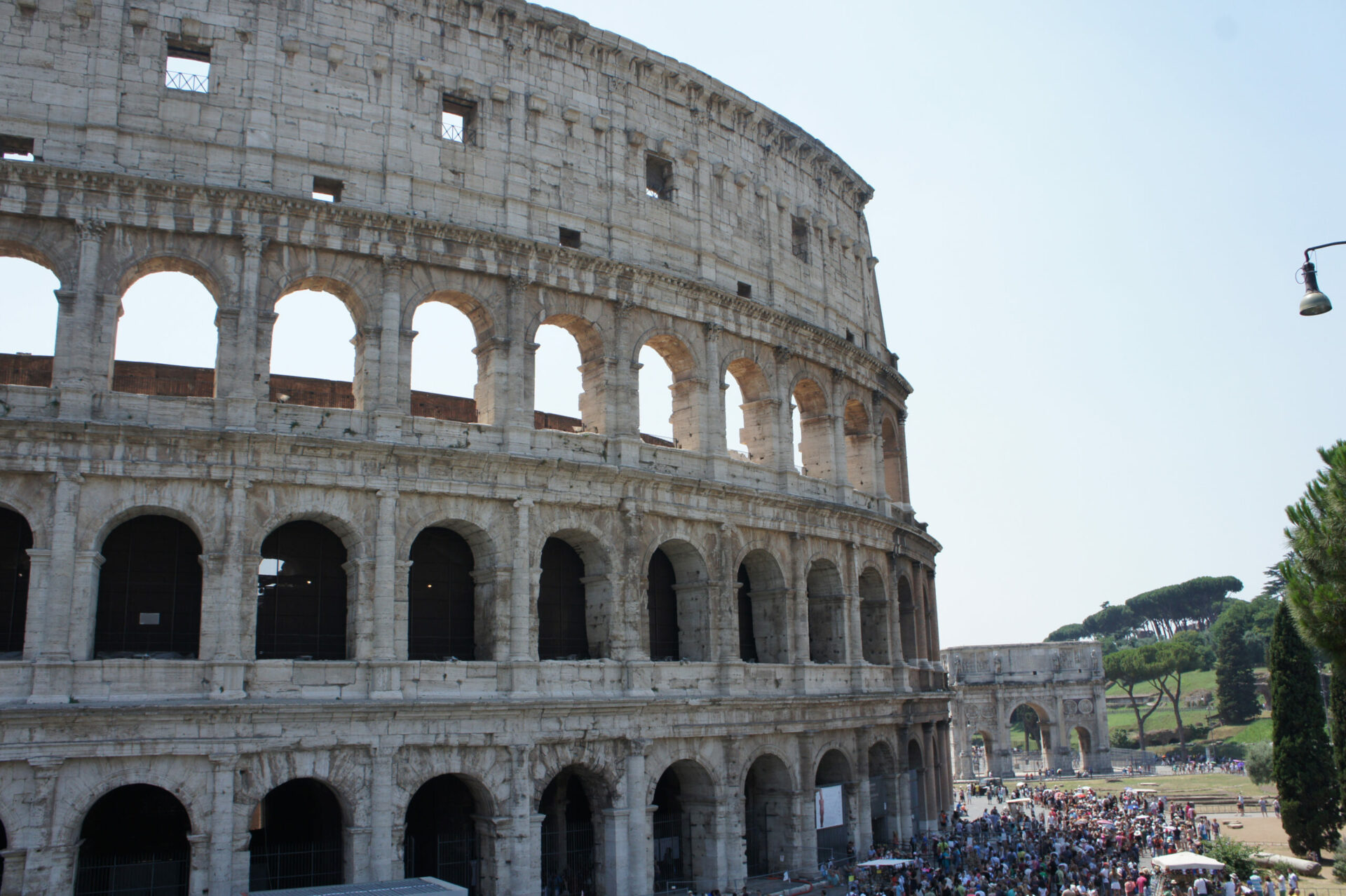
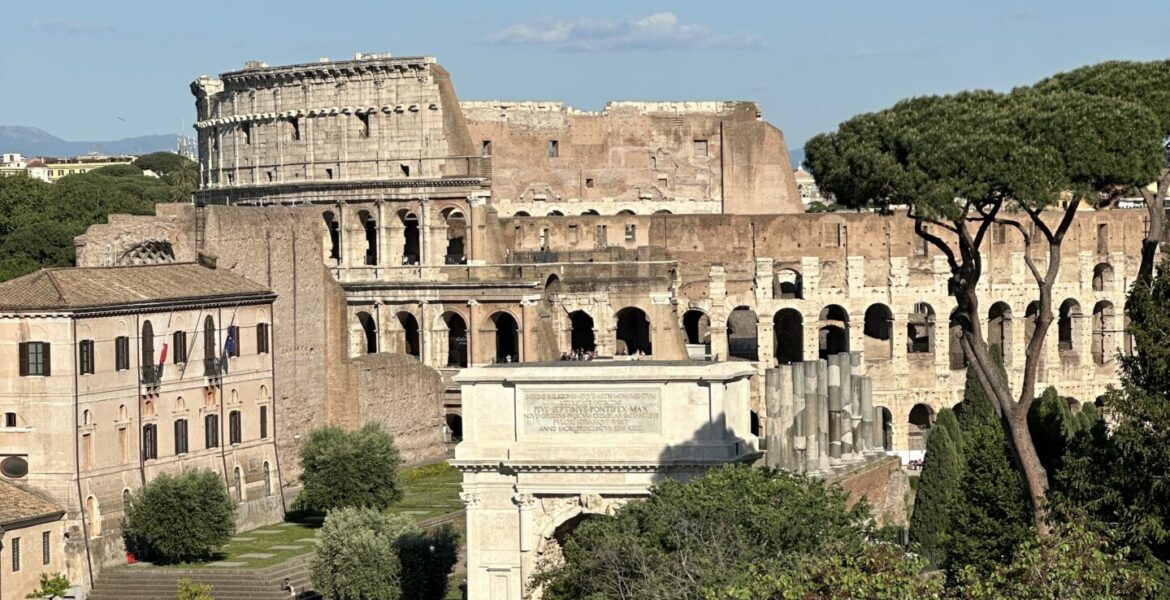
The Colosseum: Rome’s must-see landmark
A bit of history about the Colosseum
Built almost 2,000 years ago, the Colosseum, whose real name is the Flavian Amphitheatre, was inaugurated in 80 AD under Emperor Titus. It could hold tens of thousands of spectators who came to watch the famous gladiator fights, as well as hunts featuring wild animals and various other shows.
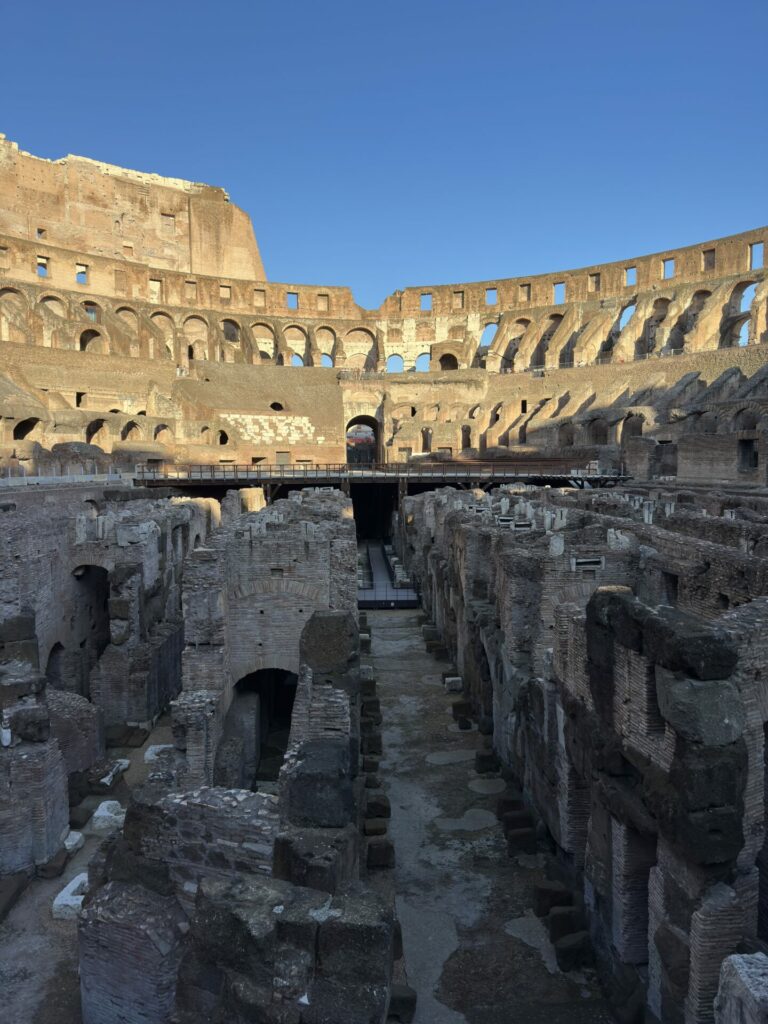
Beneath the arena lies the hypogeum, an impressive network of underground passages where gladiators and animals moved before entering the arena. Even today, these underground galleries are perfectly visible from the stands.
Despite earthquakes, looting, and nearly twenty centuries of history, a large part of the Colosseum is still standing, which definitely makes the visit all the more impressive.
Choosing the right ticket to visit the Colosseum
For our visit, we chose a ticket giving access to the central arena floor as well as the stands. And this is really something you should pay attention to when booking: the Colosseum is divided into several areas and not all tickets give access to the same parts of the monument.
Between the stands, the arena, the underground galleries, and the different packages on offer, it’s fairly easy to get confused. So take the time to check exactly what’s included in your ticket, otherwise you risk being disappointed once you’re there.
Another important tip: book your visit well in advance. We’d recommend doing so at least a month before your trip, and even earlier if you’re visiting Rome during peak season. The Colosseum is one of the most requested visits in the city and the best time slots can quickly sell out.
Our take on visiting the Colosseum with kids
Once inside, the visit is really worth it. The monument is still well enough preserved to easily understand its layout and, above all, to imagine what this huge amphitheater must have looked like in Roman times.
Our kids absolutely loved the visit. Unlike some ancient sites where only a few foundations remain and where you need a lot of imagination to picture the original buildings, the Colosseum is well preserved enough for them to really picture it. Looking at the stands, the arena, and the underground galleries, it becomes much easier to tell them how the shows unfolded almost 2,000 years ago.
One small downside during our visit though: the audio guide was only available in English or Italian, which is a bit of a shame for a monument welcoming so many international visitors, especially when discovering it with kids.
Despite that, the Colosseum remains, for us, an absolute must on a first trip to Rome. It’s one of those monuments you already know before even arriving in the city, but whose true scale and history you only fully grasp once you’re standing in front of it.
The Roman Forum: at the heart of Ancient Rome
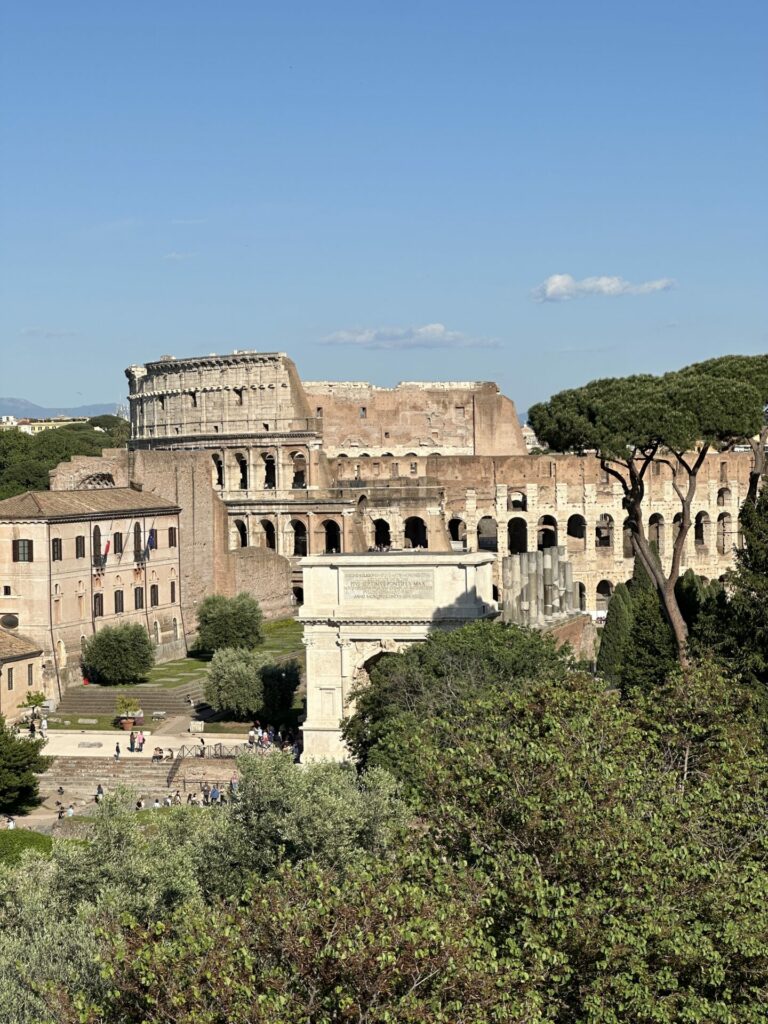
Right next to the Colosseum, the Roman Forum is the other must-see visit to discover Ancient Rome. We chose a combined Roman Forum + Colosseum ticket and started our day at the Forum before continuing with the Colosseum. This is actually the order we’d recommend: both historically and to better understand what you’ll see afterward at the Colosseum, it makes a lot more sense.
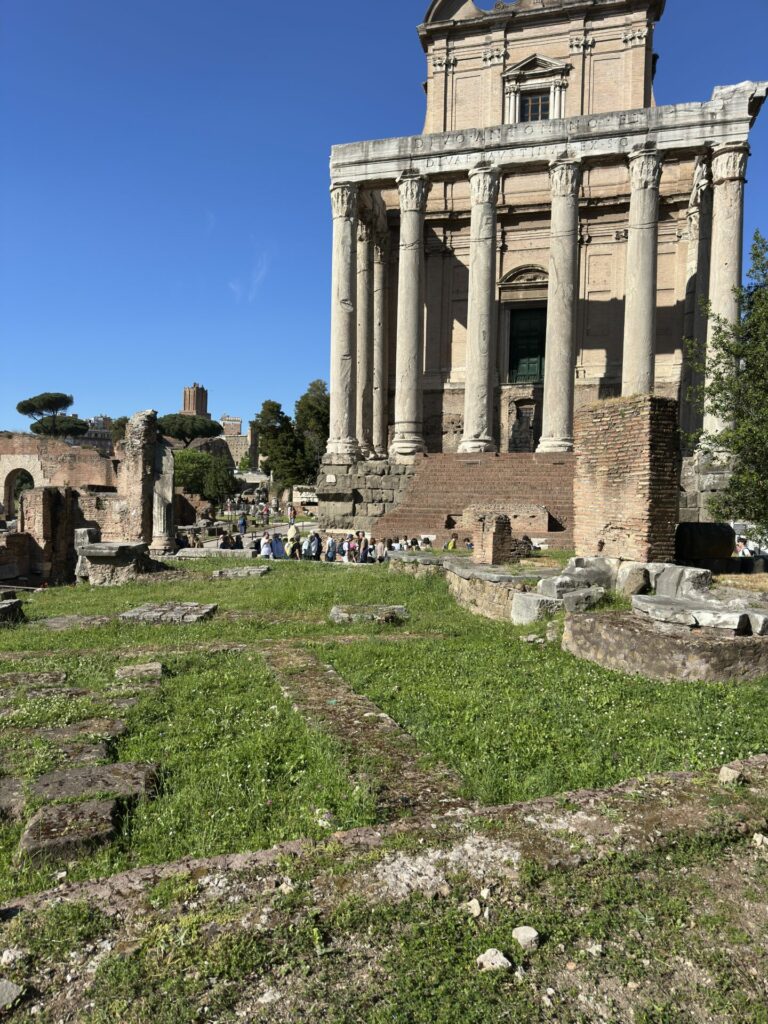
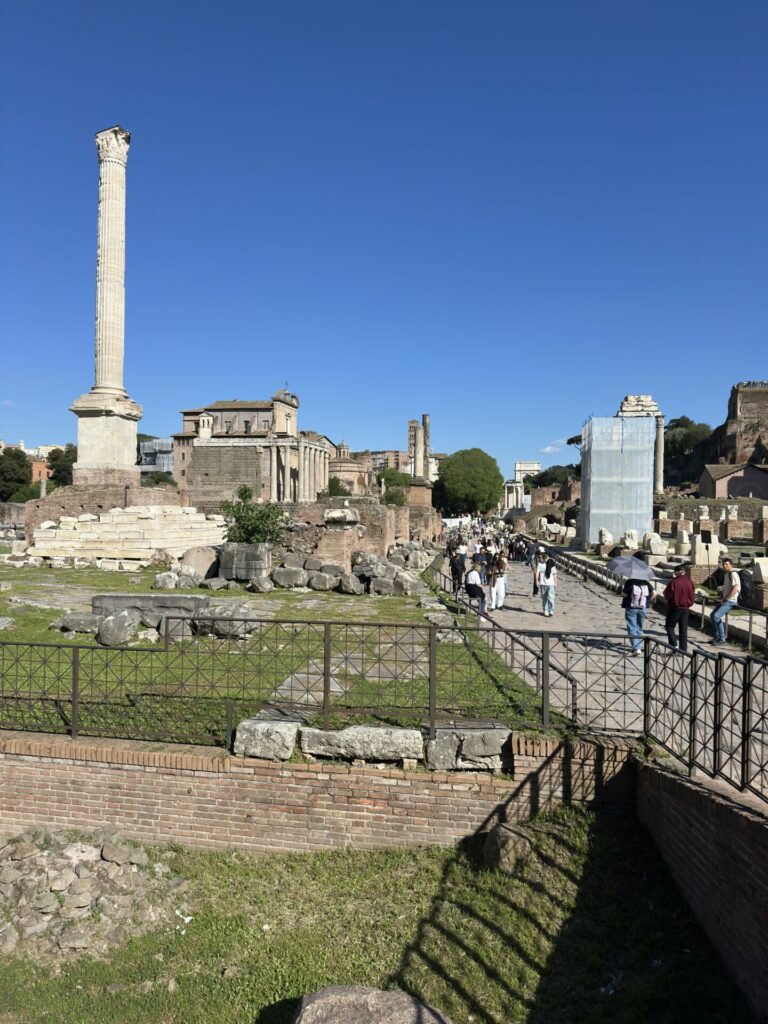
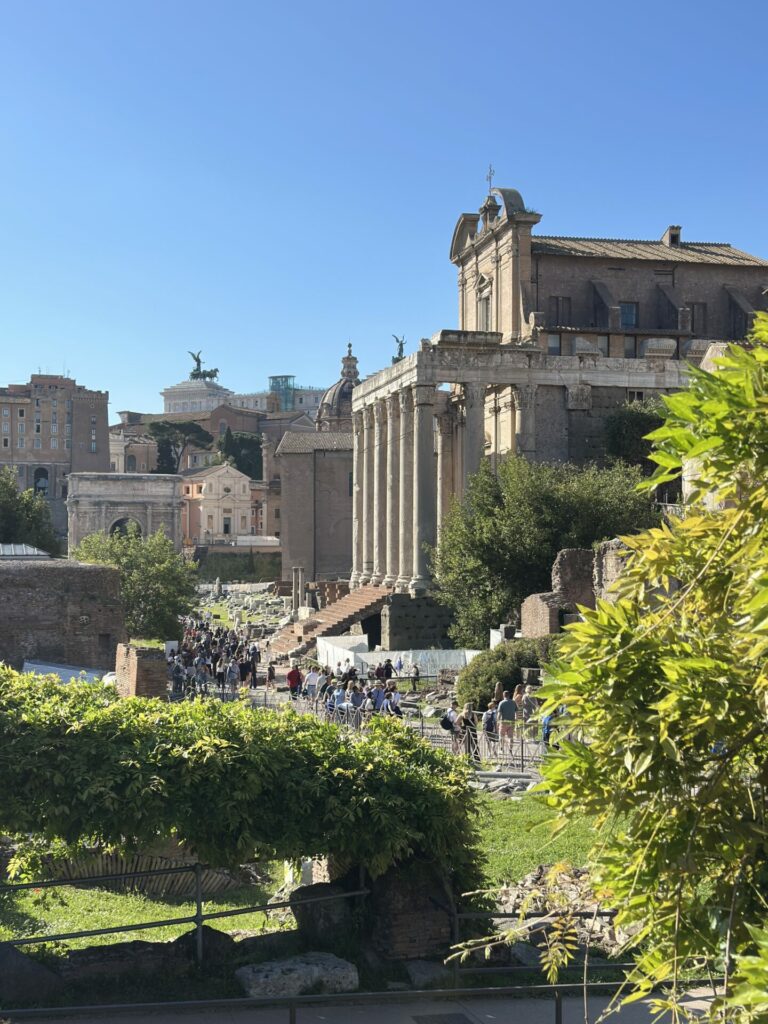
For centuries, the Forum was truly the heart of Roman life. It housed temples, basilicas, political buildings, and marketplaces. This is where a large part of the public, religious, and political life of Ancient Rome took place. Today, you can discover the remains of several temples, monumental arches, and a few still-impressive buildings.
That said, you should be aware that, unlike the Colosseum, the Forum is above all a huge archaeological site made up of ruins. Some remains are very well preserved, but it’s much harder to visualize what the site actually looked like 2,000 years ago. This is especially true with kids, who may struggle to picture much from columns or foundations.
Depending on which entrance you choose, you might not have access to an audio guide either, which is worth checking before your visit. On our side, we had prepared ahead of time with reconstruction images of the Roman Forum. This let us show the kids what the different buildings used to look like before having them spot the ruins in front of them. A small bit of preparation that really made the visit more interesting and tangible for them.
Don’t miss the garden area either, much greener and particularly pleasant. If you’re visiting Rome when it’s hot, it’s also a good opportunity to find some shade and take a break before continuing to explore the site.
Still, plan for enough time: the Roman Forum is much bigger than it looks from the outside. And if you combine it with the Colosseum like we did, comfortable shoes are a must!


The Pantheon and the Trevi Fountain: the stars of central Rome
With the Pantheon and the Trevi Fountain, we’re clearly into the category of Rome’s most visited monuments. And here, you’ll need to accept a bit of elbowing through the crowds! During our spring trip, we were surprised to find that access to both monuments had changed since our previous visit to Rome.
The Pantheon
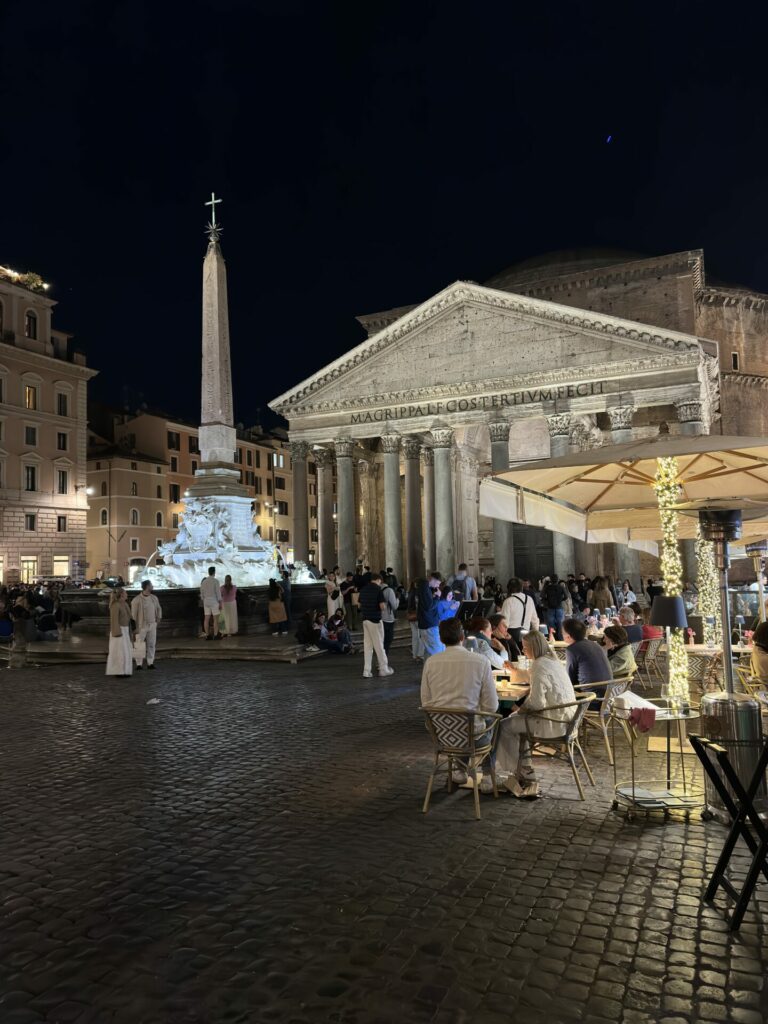
Built in antiquity then rebuilt under Emperor Hadrian in the 2nd century, the Pantheon is best known for its incredible dome and its huge central opening, the oculus, which is the monument’s only source of direct natural light. Its architecture is really unique, and the interior is far more impressive than you might imagine while simply standing on Piazza della Rotonda.
Unfortunately, this time, we couldn’t visit the inside with the kids. The queue was huge, with several hours of waiting announced! We had, however, already visited the Pantheon on a previous trip to Rome about ten years earlier, so we could show our old photos to the kids.
Since our previous visit, entry has become paid. One tip: buy your ticket in advance, especially during the busiest tourist periods. Even though you now have to pay to get in, don’t skip the visit: the Pantheon’s interior architecture is truly spectacular and unlike any other monument in Rome.
The Trevi Fountain
A few minutes’ walk from the Pantheon is another monument where crowds are pretty much guaranteed: the famous Trevi Fountain.
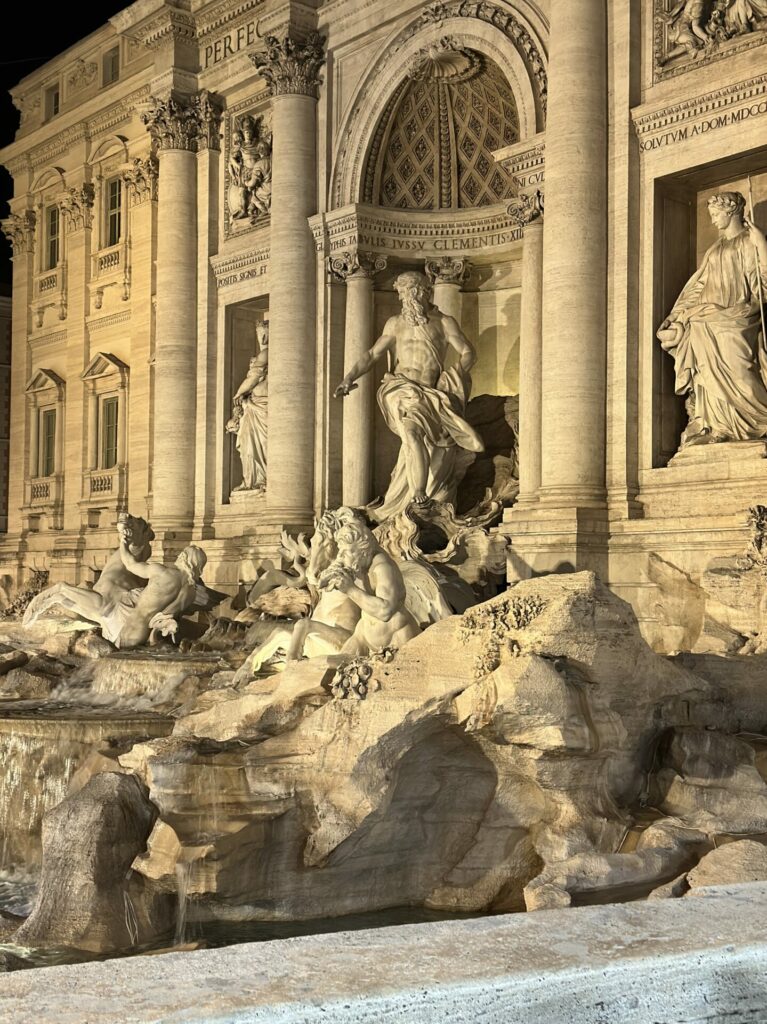
And here too, things have changed since our last visit! Since February 2026, you now have to pay €2 per person to access the area right by the edge of the fountain. That’s getting pricey for a wish and a coin tossed into the water!
Rest assured, though: you absolutely don’t need to pay to admire the Trevi Fountain. You can perfectly well stay a little further back and enjoy its architecture for free from the square. The €2 fee only gives access to the area closest to the basin.
And if, like us, you mainly want to see the fountain without standing on tiptoe and packed in like sardines, come late! We went back around 10 PM and the experience had absolutely nothing in common with the daytime one. There were still people, of course, but we could finally actually enjoy the monument.
And in the end, it turned out to be a great idea: the Trevi Fountain fully lit up at night might be even more beautiful. The lighting brings out the sculptures and the white of the stone, and the atmosphere is completely different. If your schedule allows it, save the Trevi Fountain for your evening stroll!
Villa Borghese and its gardens: a real breath of fresh air in Rome
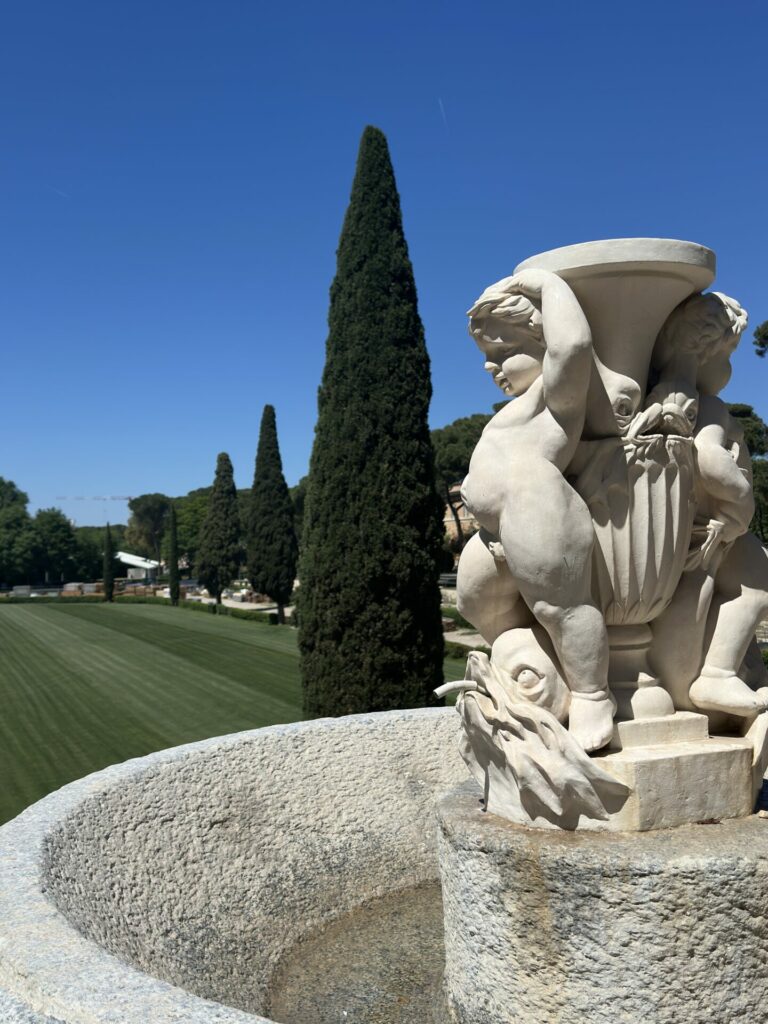
After several days walking around Rome and going from one monument to the next, the gardens of Villa Borghese were a real breath of fresh air. We deliberately chose not to visit the inside of the Galleria Borghese: since the visit is mainly focused on artworks, we didn’t think it would be the best fit with young kids.
Instead, we spent a whole half-day at Villa Borghese park, and what a treat! The park is huge and, despite the crowds you can find in central Rome, we sometimes felt almost alone. A real bubble of freshness and calm right in the heart of the capital.
We started by strolling calmly along the big shaded avenues while the kids could finally run around and let off some steam. When you visit Rome as a family and ask the kids to walk for hours between the different monuments, this kind of break really does everyone good!
Rowing on the Villa Borghese lake
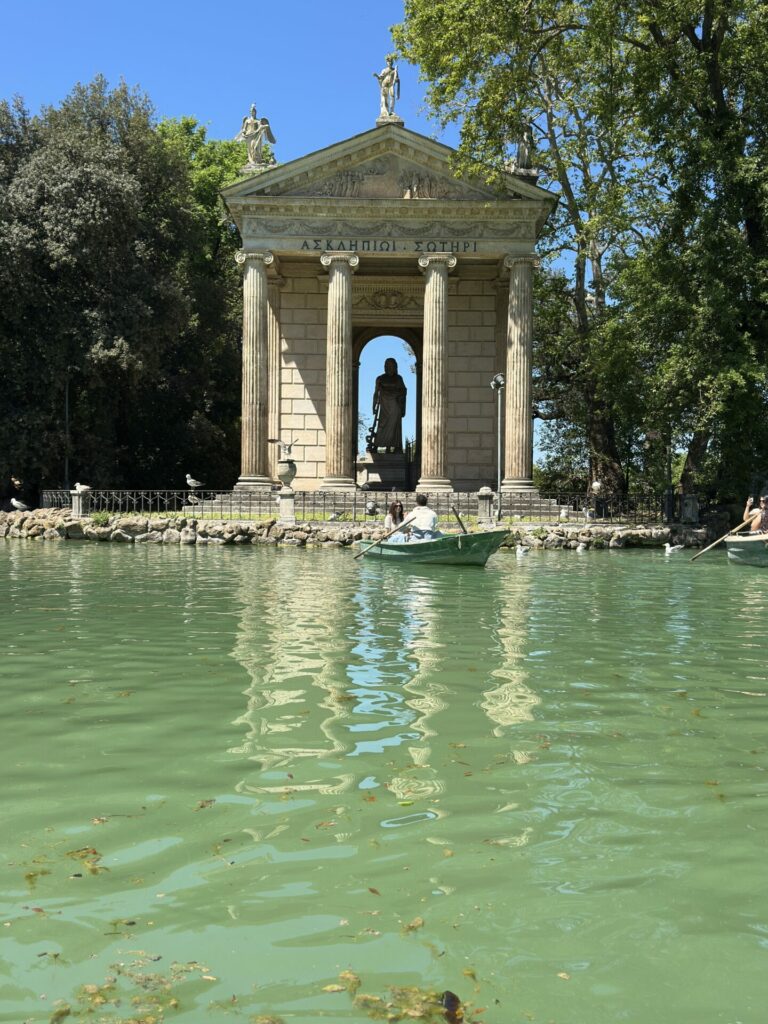
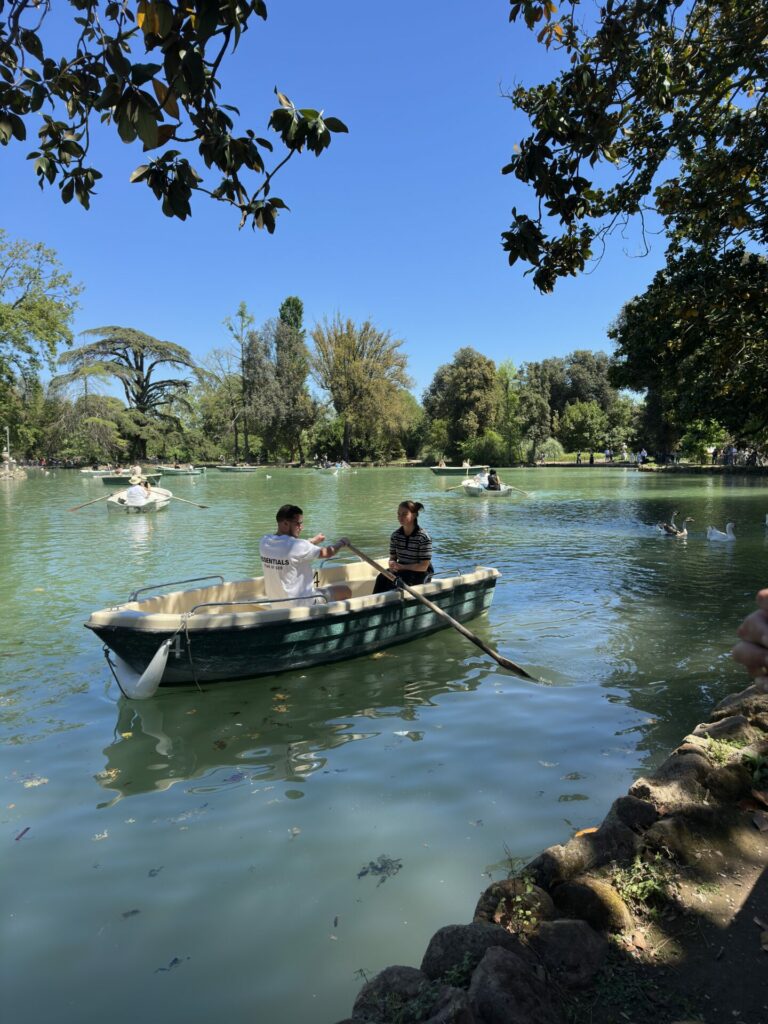
We then decided to try an activity that, at first glance, seemed like a tourist trap: rowing on the park’s little lake. At €20 for 30 minutes for four people, we did hesitate a bit…
But in the end, no regrets at all: we loved it!
The ride on the lake, around the lovely Temple of Aesculapius, is already very pleasant, but it mostly turned into a great family memory. We laughed a lot, mostly because Adrien clearly had some trouble mastering the art of rowing!
Another nice surprise: the lake is home to plenty of turtles. From the boat, you can watch them much more closely, which the kids obviously loved.
In the end, this little boat ride that we thought might be a bit too touristy turned into one of our best family memories in Rome. If you’re visiting the capital with kids, we really recommend setting aside a few hours for Villa Borghese and, if you get the chance, treating yourself to a boat ride!
Trastevere: our favorite neighborhood in Rome
Trastevere was a real favorite during our stay in Rome. Located on the other side of the Tiber, this neighborhood has a very different vibe from the one you’ll find around the big monuments of the historic center. Here, there’s less sightseeing to pack in: you mainly come to stroll, soak up the atmosphere, and of course, eat!
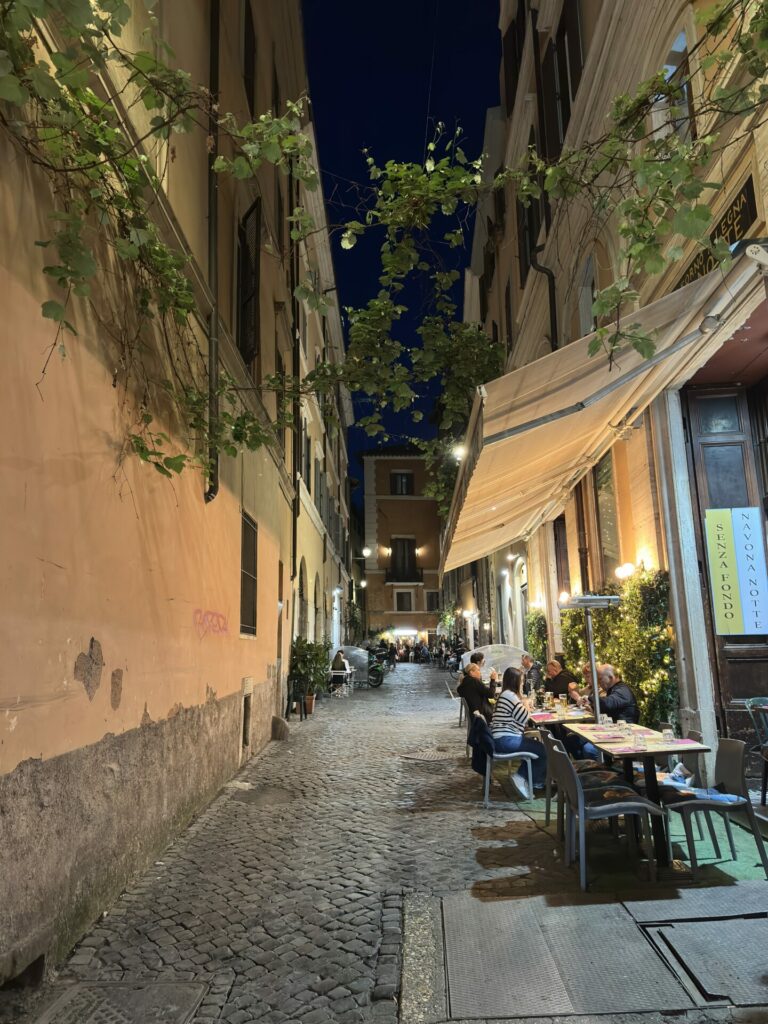
The neighborhood is especially lively in the evening. The terraces fill up, the streets come alive, and plenty of Romans come here to spend their evenings too. Even though Trastevere is now well known to visitors, we found it much less touristy and much more authentic than the areas around the Trevi Fountain or the Pantheon.
With its little cobbled streets, colorful facades, squares, and countless terraces, it’s really a neighborhood where you should take the time to wander without necessarily having a set itinerary.
Trastevere, one of the best neighborhoods to eat in Rome
And if we went back to Trastevere two evenings in a row, that’s no coincidence! The neighborhood is packed with great food spots, hidden gems, and some really good restaurants. This is actually where we came to enjoy one of Roman cuisine’s signature dishes: the must-try carbonara pasta.
Forget the cream, obviously: real Roman carbonara is made with guanciale, eggs, pecorino romano, and black pepper. A very simple dish in the end, but when it’s done well… what a treat!
We’ll share our favorite addresses further down in this guide, because we really made some wonderful food discoveries in Trastevere.
A very pleasant neighborhood with kids, even at night
We also really appreciated how family-friendly Trastevere felt. Despite the buzz of the restaurants and terraces, the atmosphere stays very pleasant with kids around. There are plenty of families in the streets, and we always felt perfectly comfortable walking around, even fairly late in the evening.
If you’re spending several days in Rome, we really recommend setting aside at least one evening for Trastevere. Come at the end of the day, get lost in the little streets, stop for a drink, then settle into a proper trattoria to end the evening with a real Roman carbonara. For us, it’s clearly one of the atmospheres not to miss in Rome!

The Vatican, St. Peter’s Square, and the Vatican Museums
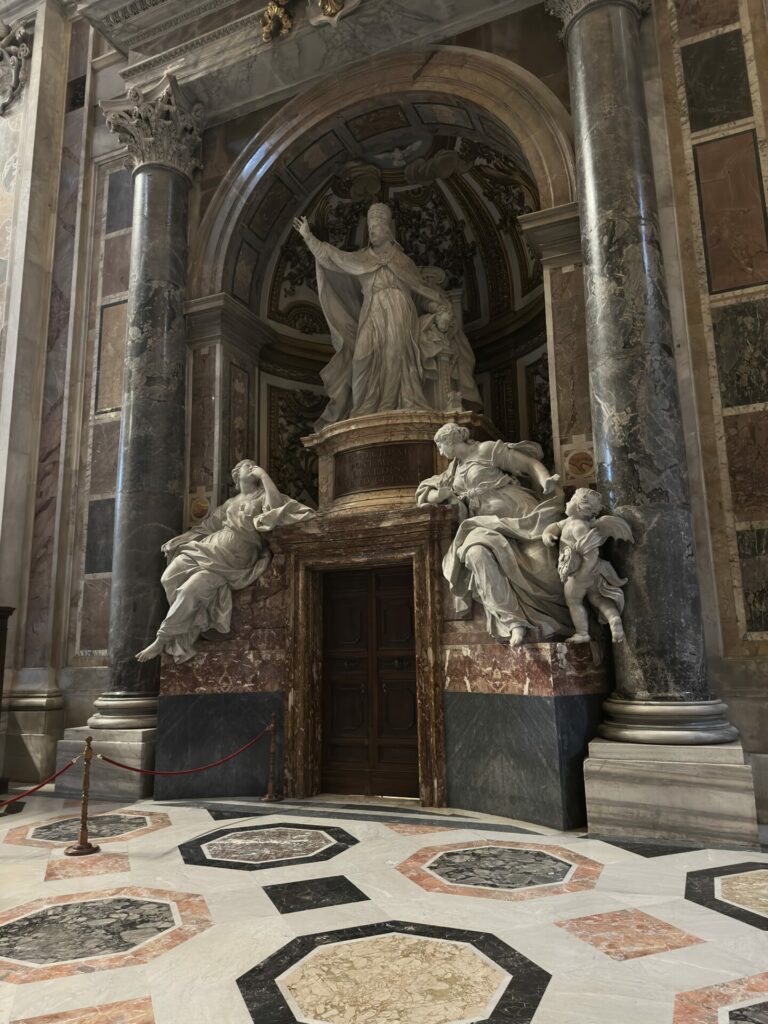
It’s impossible to spend a few days in Rome without setting aside at least half a day for the Vatican. Between the Vatican Museums, the Sistine Chapel, the huge St. Peter’s Square, and the basilica, this is obviously one of the great must-sees of the trip. But it’s also one of the places where we saw the biggest crowds in Rome!
The Vatican Museums: book your tickets in advance, no matter what!
Our first tip is simple: book your tickets for the Vatican Museums well in advance! You can pick a time slot for your visit, which will save you from wasting hours in a queue, sometimes in the blazing sun.
You wouldn’t believe how many people visit the Vatican Museums every single day! Even with a reservation, expect to find plenty of people once you’re inside.
And the collections truly are incredible. The museum is huge, and you make your way through room after room dedicated to different eras and civilizations before reaching one of the most anticipated moments of the visit: the famous Sistine Chapel and Michelangelo’s frescoes.
Really plan for enough time: depending on your pace, half a day isn’t too much to properly enjoy the museums without rushing through the rooms.
Visiting the Vatican Museums with kids
We also chose to get audio guides, including for the kids, and it’s something we’d really recommend.
The kids’ audio guide is really well designed and completely changed how they experienced the visit. They were captivated and ended up enjoying the museum much more than we expected. The section on Ancient Egypt was one of their favorites in particular.
If you’re hesitant about visiting the Vatican Museums with kids for fear they’ll get bored, the kids’ audio guide is a real plus, in our opinion.
St. Peter’s Square and St. Peter’s Basilica
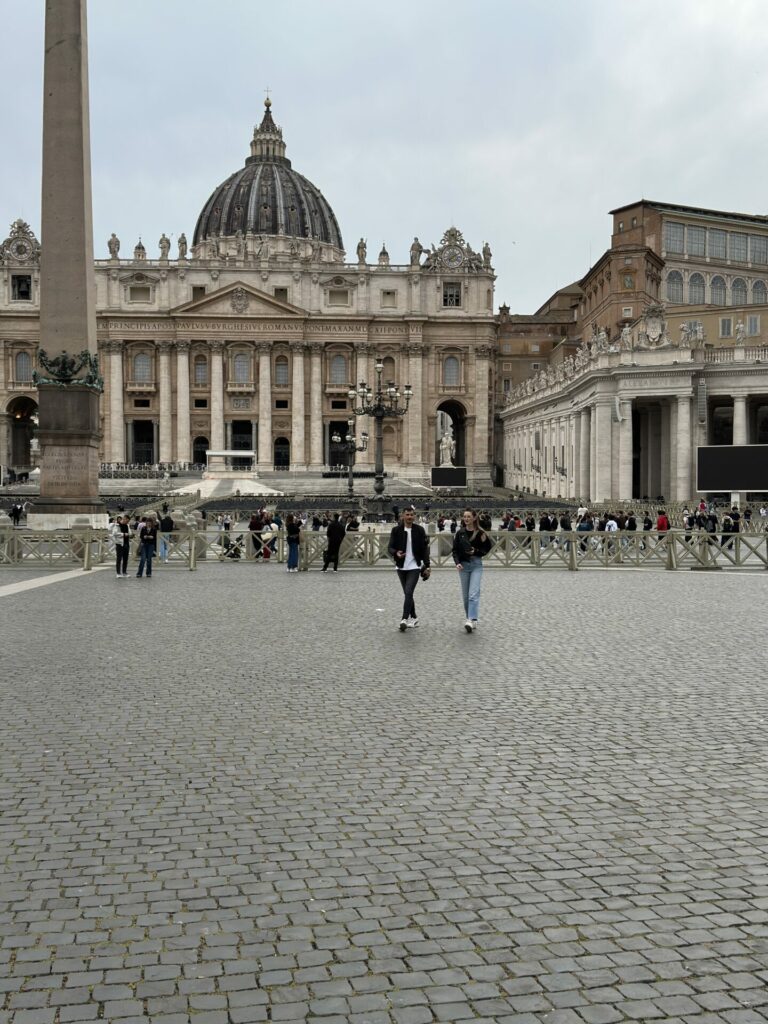
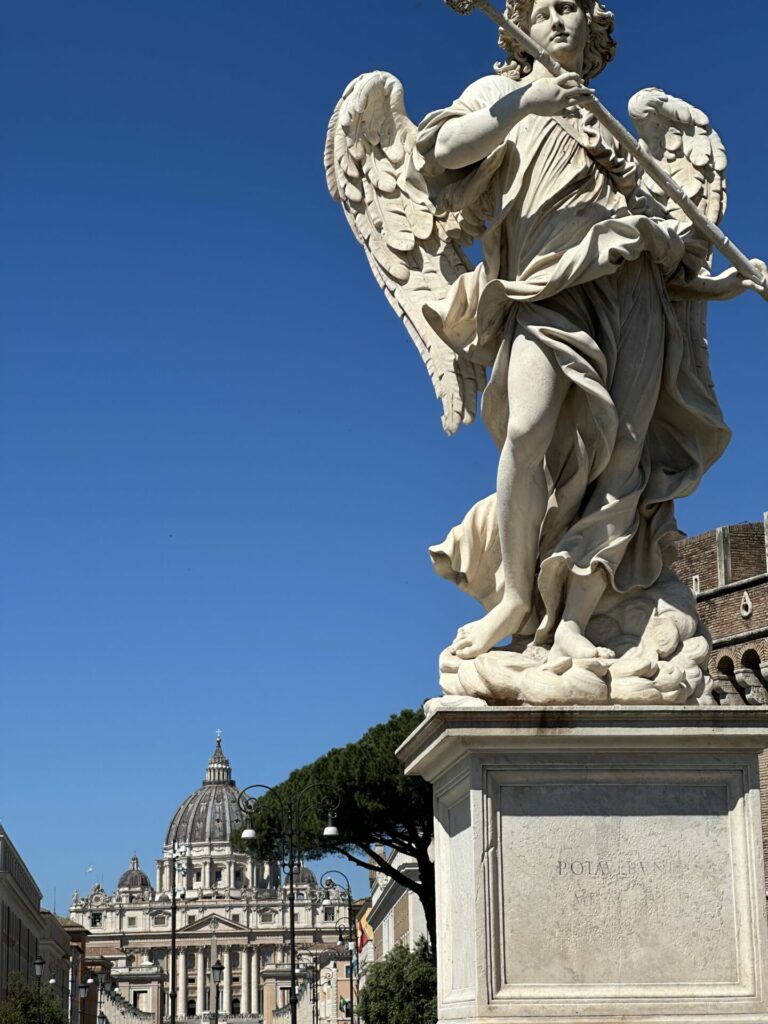
After the museums, head to the impressive St. Peter’s Square and its famous colonnade. It’s from this square that you access St. Peter’s Basilica, and here’s an important thing to know: entry into the basilica is free. So don’t be fooled by anyone who tries to make you think you need to buy a ticket to get in. Some things, like access to the dome, are paid, however.
The main issue, once again, is the crowds. Our second tip is to come at the end of the day, before the basilica closes. This let us avoid the endless queues we’d seen earlier in the day.
And in the end, this late visit gave us one of the most beautiful moments of our time at the Vatican. The sun slowly sets behind the square and lights up the basilica in a gorgeous glow. The whole atmosphere changes, the day comes to an end, and the Vatican takes on an almost mystical feel.
Just for that moment alone, we’d really recommend coming back to St. Peter’s Square in the evening, even if you’ve already explored the Vatican during the day.
Visiting Rome by motorhome: where to stay
If you’re arriving in Rome by motorhome, we’d advise against trying to park in the city center, and especially against spending the night there with your vehicle. Rome is clearly not the city where we’d feel most at ease leaving our motorhome unattended, especially given the accounts of thefts and break-ins in recreational vehicles.
To enjoy your stay with peace of mind, we’d instead recommend booking a campsite on the outskirts of Rome and then using public transport to reach the city center. That’s the solution we chose, and we haven’t regretted it at all.
Camping Flaminio: our pick for visiting Rome by motorhome
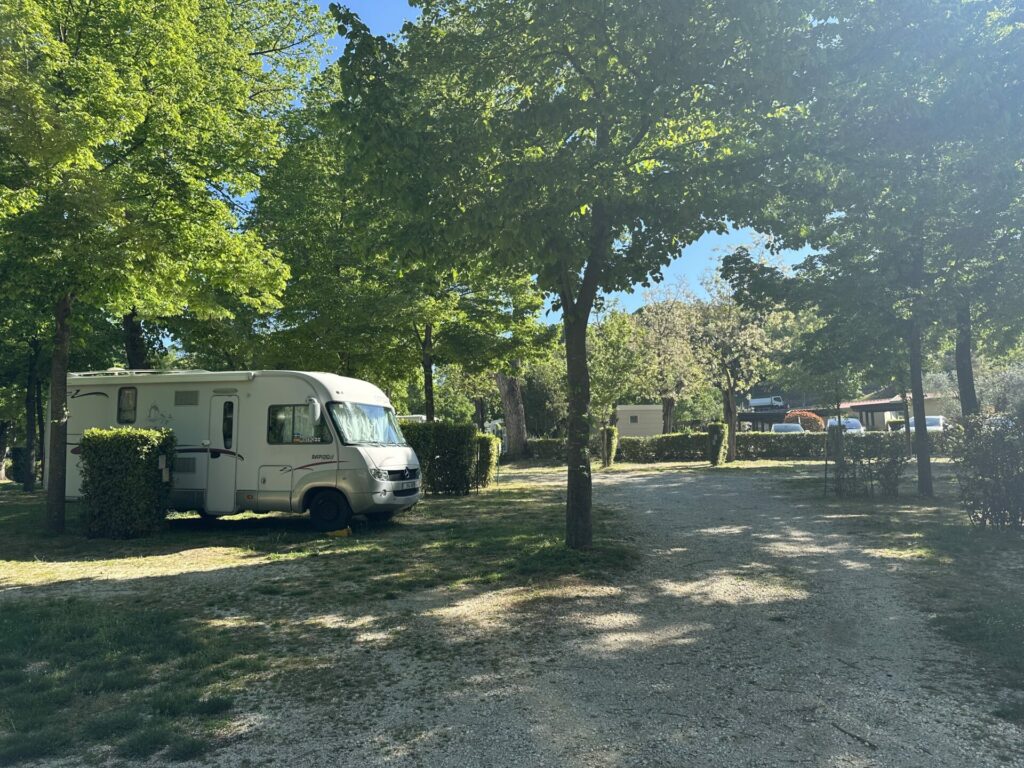
We stayed at Camping Flaminio, located just outside central Rome, and we loved it!
The campsite is huge, very green, and particularly well maintained. After a day spent amid the hustle and bustle of Roman crowds, it’s genuinely nice to come back to a much calmer, greener environment.
But its main advantage is really its location. You can reach the heart of Rome in about twenty minutes by train, with a station accessible right from the campsite. So you can leave your motorhome parked for the whole stay and go explore Rome without worrying about traffic or parking.
For us, this is really the best compromise for visiting Rome by motorhome: the vehicle stays at the campsite, you easily reach the city by public transport, and you find some peace and quiet again in the evening after a big day of sightseeing.
One last tip: book your pitch in advance, especially in spring and summer. Rome attracts a huge number of visitors, and the best-located campsites are naturally in high demand.
If this is your first motorhome road trip, also take the time to check out our guide to preparing your motorhome road trip before hitting the road.
If your motorhome road trip through Italy doesn’t stop in Rome, keep exploring with our guide to visiting Florence by motorhome, our complete guide to the Cinque Terre, or our pick of the most beautiful villages in Tuscany.