✍️ This article was originally published on 20 May 2026, it was updated on 7 October 2026.
After our motorhome road trip through Sweden, we’re sharing our favourite spots — the places that, looking back, truly left a mark on us, the ones we’d happily return to, the ones we’ll remember for a long time to come!
Sweden is one of those destinations that surprises you from the very first kilometres. Between colourful waterside villages, vast forests, scenic roads, Nordic traditions and nature everywhere you look, the country offers a genuine sense of space and freedom.
There’s a feeling of calm and simplicity throughout that makes travelling here particularly enjoyable.
On our road trip across the country, we discovered places that are all very different from one another: typical fishing harbours on the west coast, impressive rapids deep in the northern forests, historic villages frozen in time, and iconic experiences like moose spotting. What also struck us about Sweden is how easy it is to travel: the infrastructure is excellent, nature is accessible everywhere, and the country is perfect for a road trip, especially by motorhome!
Smögen: the postcard village of Sweden’s west coast
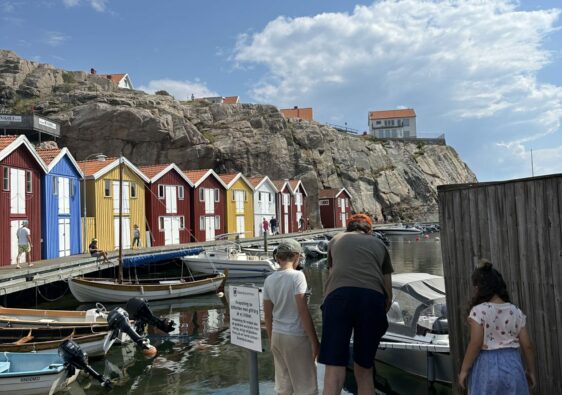
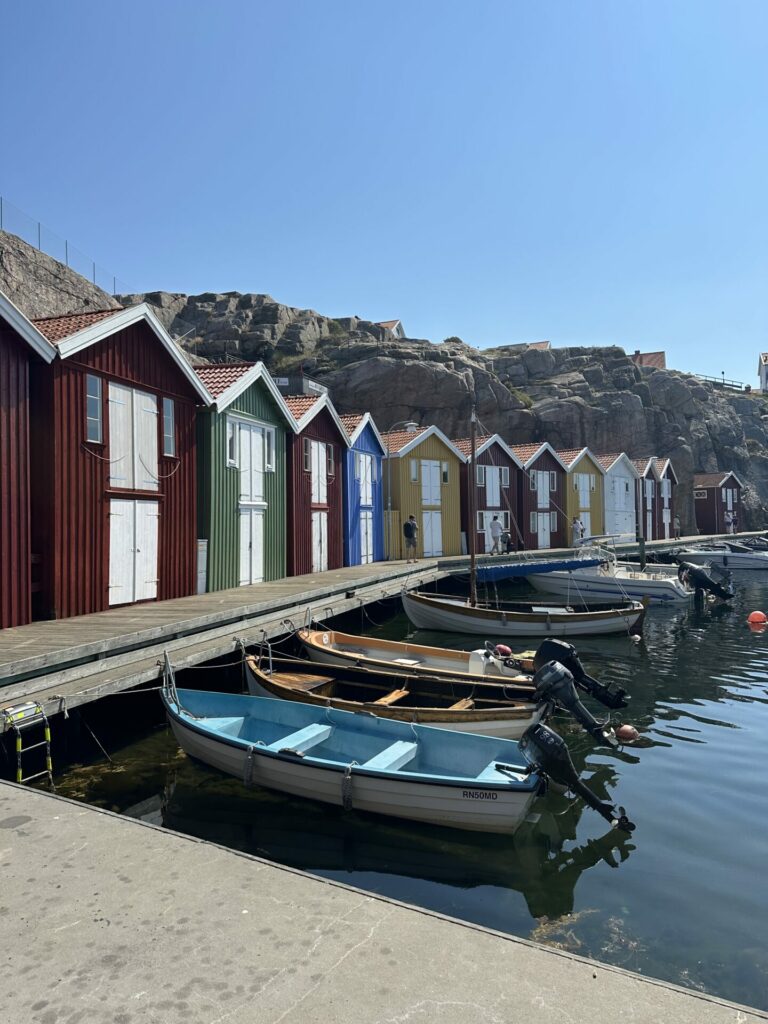
If there’s one place that perfectly captures what Sweden looks like in summer, it’s Smögen. Located on the west coast of the country, this small fishing port is often considered one of the most beautiful villages in Sweden. And honestly, we understood why the moment we arrived.
With its colourful houses perched on the rocks, small boats moored in the harbour and a typically Scandinavian maritime atmosphere, Smögen has an incredible charm.
Though very touristy, the village fills up quickly in summer — we actually thought we’d only stop briefly, but ended up spending the whole day! The village is so beautiful and so pleasant, and as soon as you walk a little further out, you quickly find yourself completely alone!
The heart of the village is its famous wooden boardwalk, the “Smögenbryggan”. This long waterfront promenade is lined with restaurants, small shops and lively terraces throughout the summer. The atmosphere is very vibrant without being overwhelming, with a mix of locals, sailors and travellers who’ve come to enjoy the Swedish coastline.
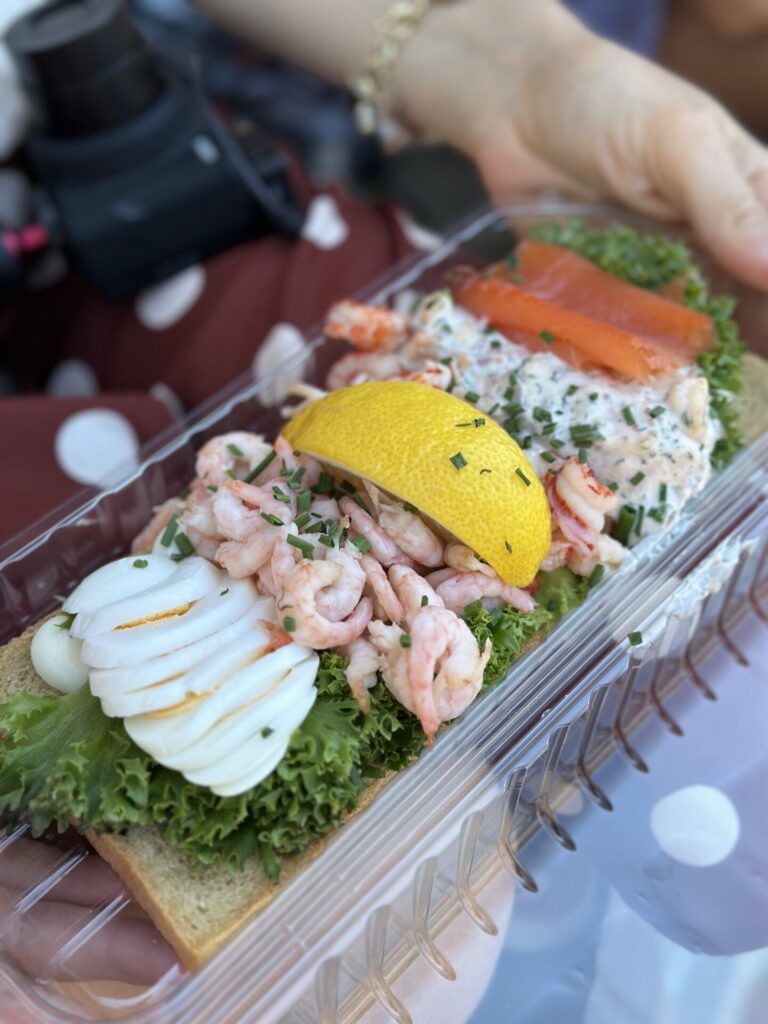
You simply can’t visit Smögen without trying one of the local specialities: the famous shrimp sandwich. Generously topped with fresh shrimps, usually accompanied by eggs, mayonnaise and dill, it’s a classic of the Swedish west coast.
Don’t miss it — trust us, it’s delicious!!
But Smögen isn’t just its harbour. One of our favourite moments was the walk along the sea, over the enormous rocks smoothed by wind and waves. The scenery is stunning, with that very special Nordic light that brings out the colours of the water and granite. You can easily spend several hours walking, watching the sea, or simply sitting on the rocks to enjoy the peace — and we had it completely to ourselves! All while our starting point was just a few metres from the famous colourful harbour where the tourists gather.
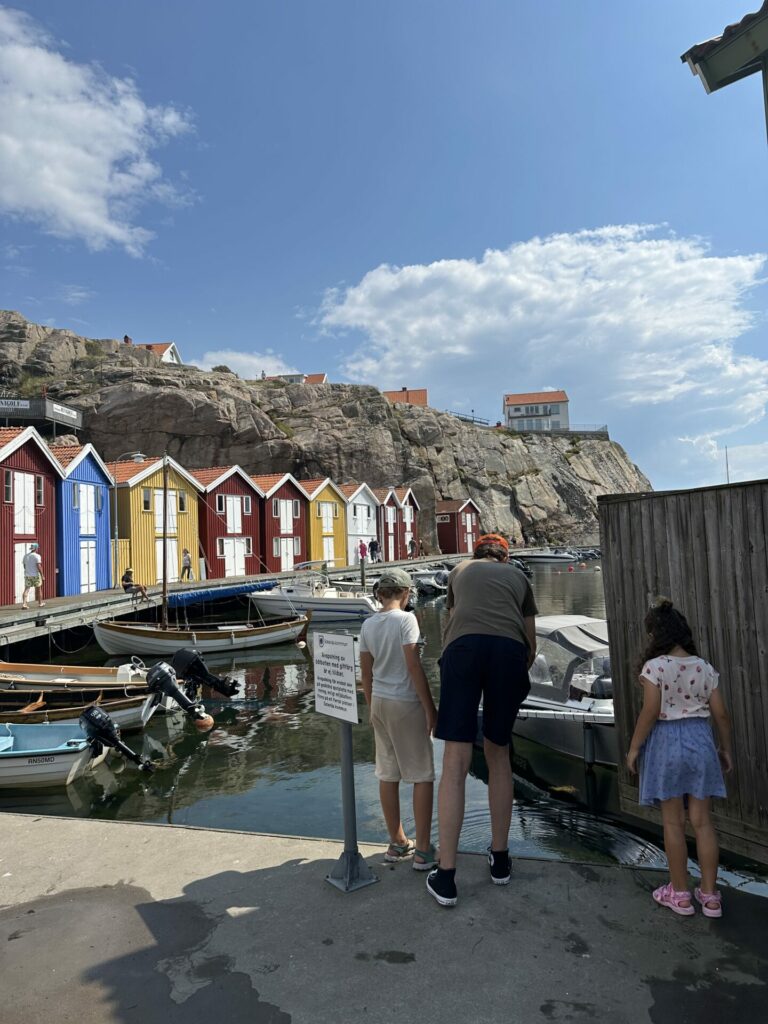
If you have children — or if you’re a big kid yourself — we recommend buying a small crab fishing rod for a few euros. You’ll find them everywhere in the harbour shops. Then head to the colourful boardwalk and try your hand at crab fishing! The kids loved it! There were so many crabs the bucket was full in no time! After a good laugh trying to catch them and watching them escape, we released them all — a fantastic activity for next to nothing!
Moose farms: an unforgettable encounter with Sweden’s iconic animal
When you think of Sweden, it’s impossible not to think of moose. Seen everywhere on road signs, in souvenir shops, and even woven into local culture, they are truly part of the country’s identity. During our trip, we really wanted to see this mythical animal up close.
Or rather, we dreamed of it! Because yes, before this trip, we had never seen one in real life.
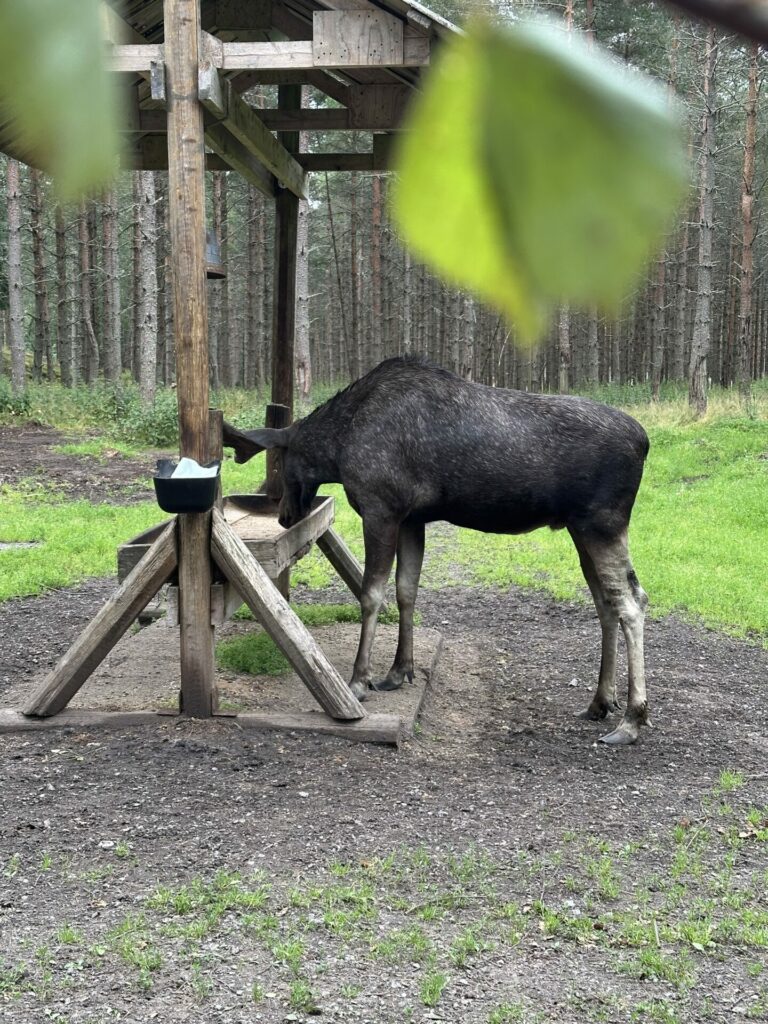
While it is possible to spot moose roaming free by the roadside or at the edge of a forest, it’s actually quite rare — and usually very brief. Moose farms are therefore an excellent alternative for observing them in good conditions while learning more about them.
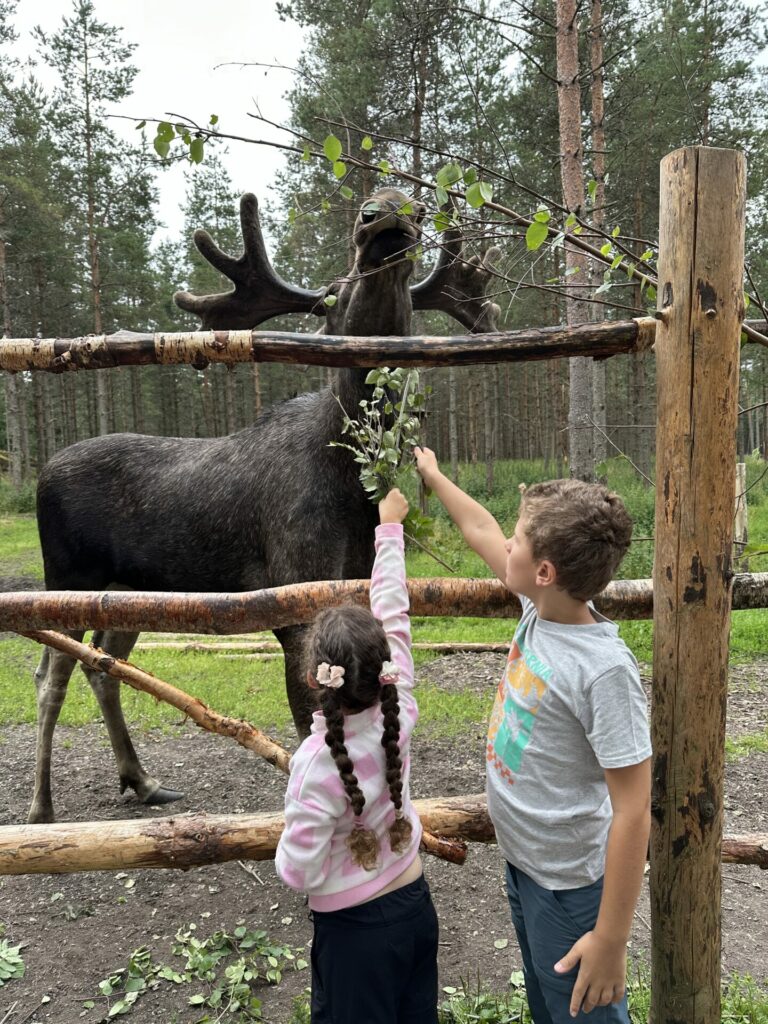
In Sweden, several farms allow you to get very close to moose. Some even let you feed or pet them, always within a very supervised and animal-friendly setting. It’s quite an impressive experience, because you don’t fully grasp their size until you’re standing right next to one. A moose is huge — far more massive than you generally imagine.
Beyond the “souvenir photo” aspect, we found these visits genuinely fascinating. The owners often share a great deal about moose behaviour, their way of life, their diet, and the challenges they face depending on the season. You learn, for example, that they’re excellent swimmers, that they can cover long distances through Swedish forests, and that they are much more active at sunrise and sunset.
For children, it’s obviously a highlight of the trip. Getting this close to such an iconic animal is a truly unique memory. But honestly, even as adults, we absolutely loved the experience.
The farms are often located in stunning natural settings, deep in Swedish forests, which adds to the charm of the experience. Some also have small cafés, local shops or educational spaces that allow you to extend the visit at a leisurely pace.
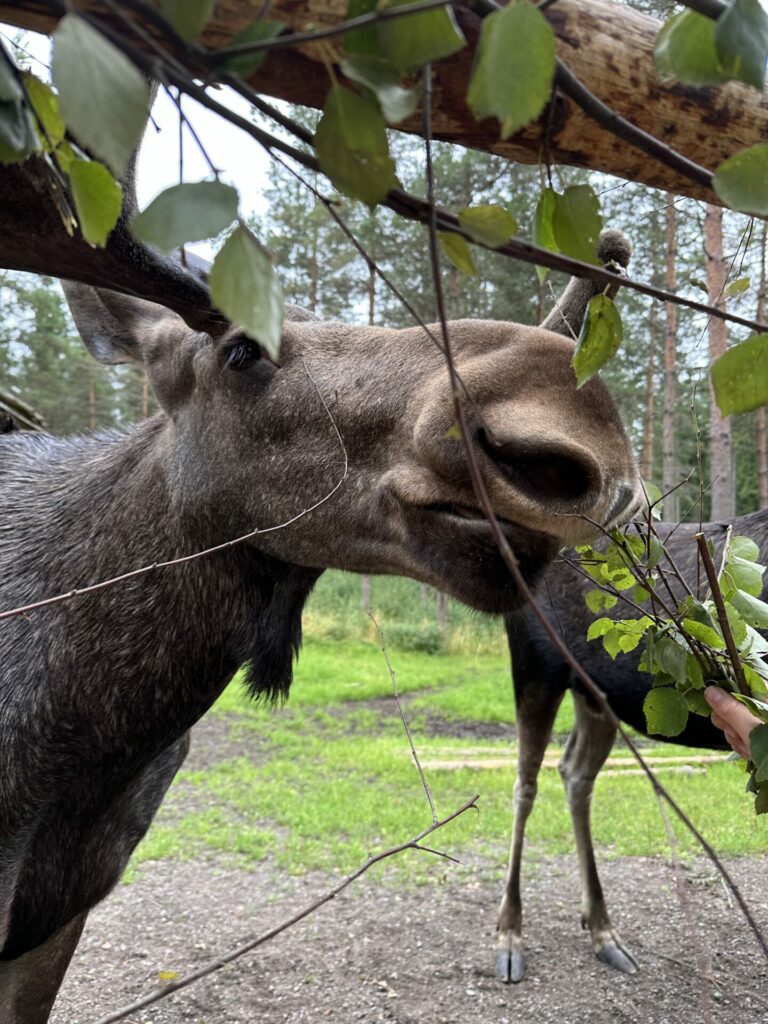
We visited two different farms. At one, we got to feed and pet the moose. Being that close was genuinely impressive — and a moose is an extremely calm animal despite its size, which means you have to be calm too so as not to frighten it, using slow and gentle movements. We learned that in summer their coat is slightly oily to protect against the sun, and that their antlers are incredibly soft!
At the second farm, there were more of us, so to avoid disturbing them, we kept a respectful distance — because they are easily startled — but we learned so much about this captivating, impressive and truly beautiful animal!

Storforsen: Sweden’s most impressive rapids
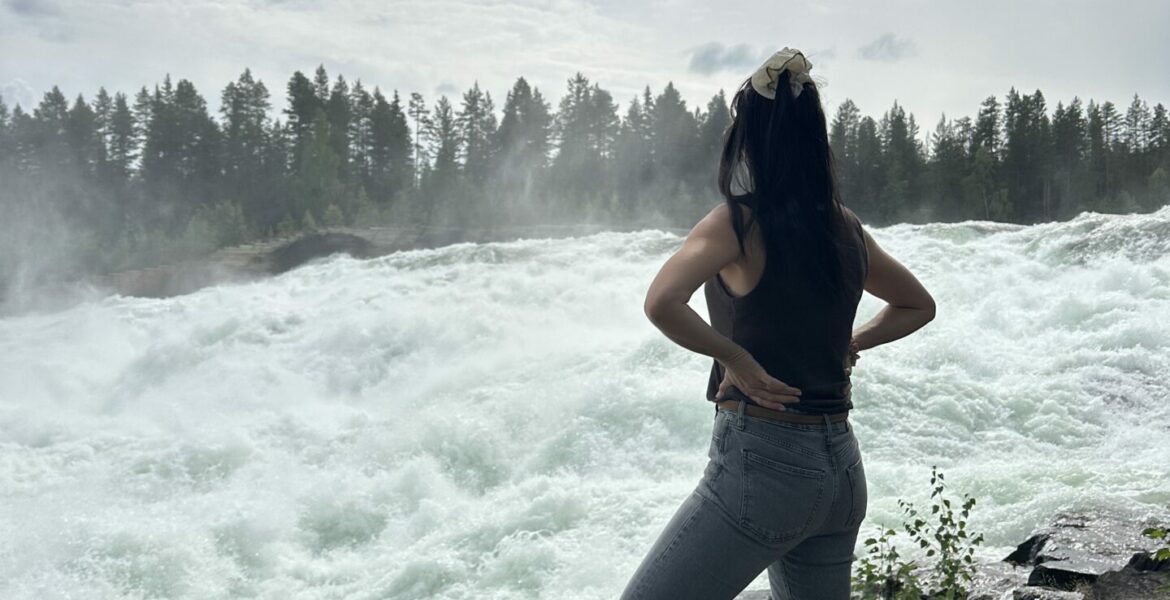
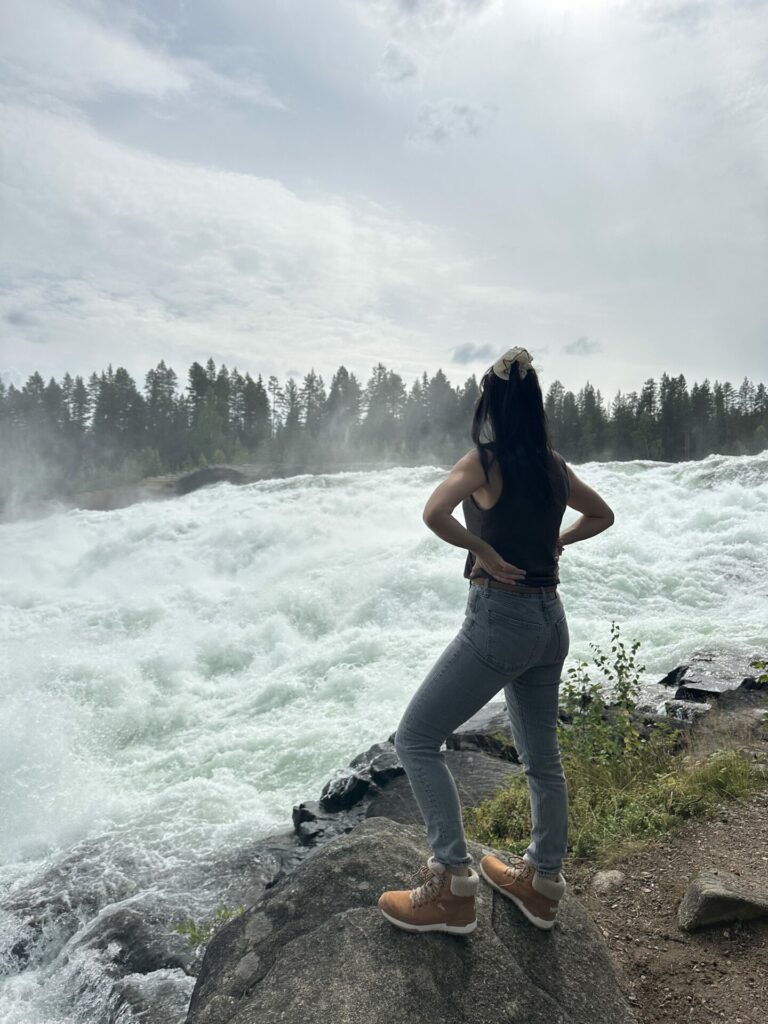
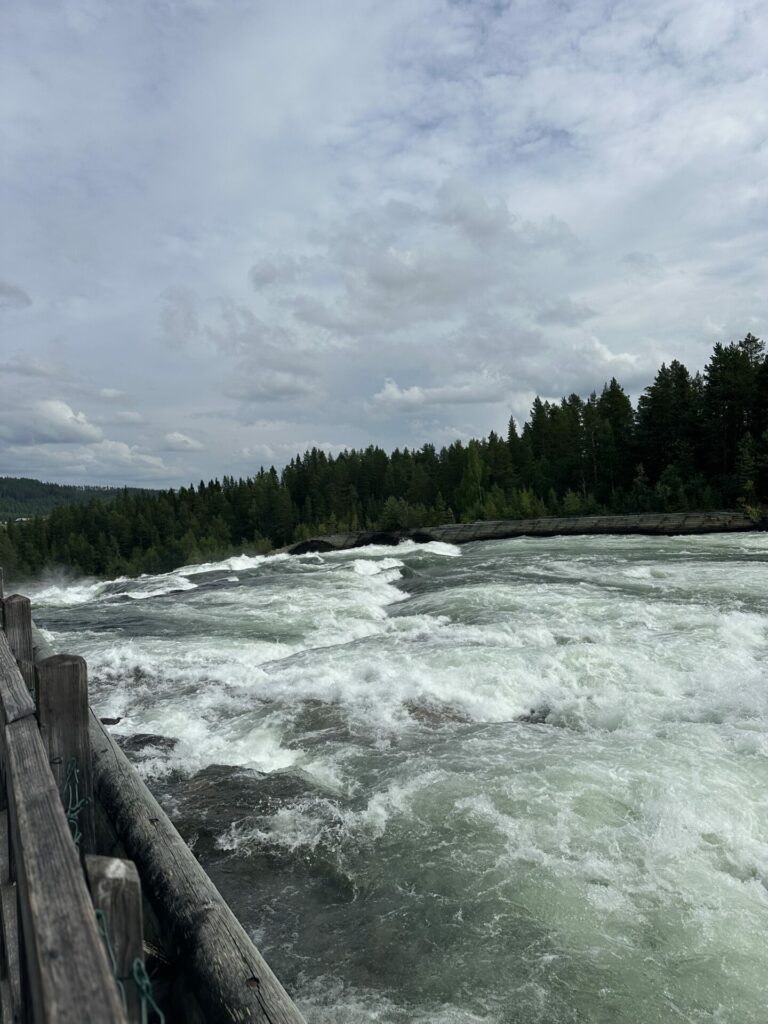
In northern Sweden, deep in nature, Storforsen is probably one of the most awe-inspiring places we encountered on our trip. No colourful village, no museum here — just incredible raw power in the middle of Swedish forests.
Storforsen is considered one of the largest rapids in Europe. Over several kilometres, the water rages between the rocks with a thunderous roar. Even having seen photos beforehand, we weren’t prepared for such power once we were there. The flow is immense and the atmosphere very particular, with a feeling of being completely immersed in the heart of Nordic nature. To be honest, photos simply don’t do it justice — it’s so much more impressive in person.
The site is very well laid out with wooden walkways and trails that allow you to observe the rapids from different vantage points. The walk is easy and accessible, letting you take your time and enjoy the scenery without difficulty. At every bend, the view changes completely: sometimes you’re looking down over the rapids from above, sometimes you’re almost at water level, right next to the whirlpools and enormous boulders. And for food lovers — the site is full of wild blueberries! So remember to bring something to pick them with; it would be a shame to miss out!
The spot is also perfect for a longer hike. Several trails wind through the surrounding forests, letting you discover a wilder, calmer side of Sweden, far from the usual tourist areas. In summer, with the Nordic light and the tall pines all around, the atmosphere is truly incredible.
What we particularly loved about Storforsen is the constant contrast between the violence of the rapids and the absolute calm of the surrounding forest. You can hear the water everywhere, but as soon as you step away from the main walkways, you immediately get that sense of tranquillity typical of Scandinavian countries.
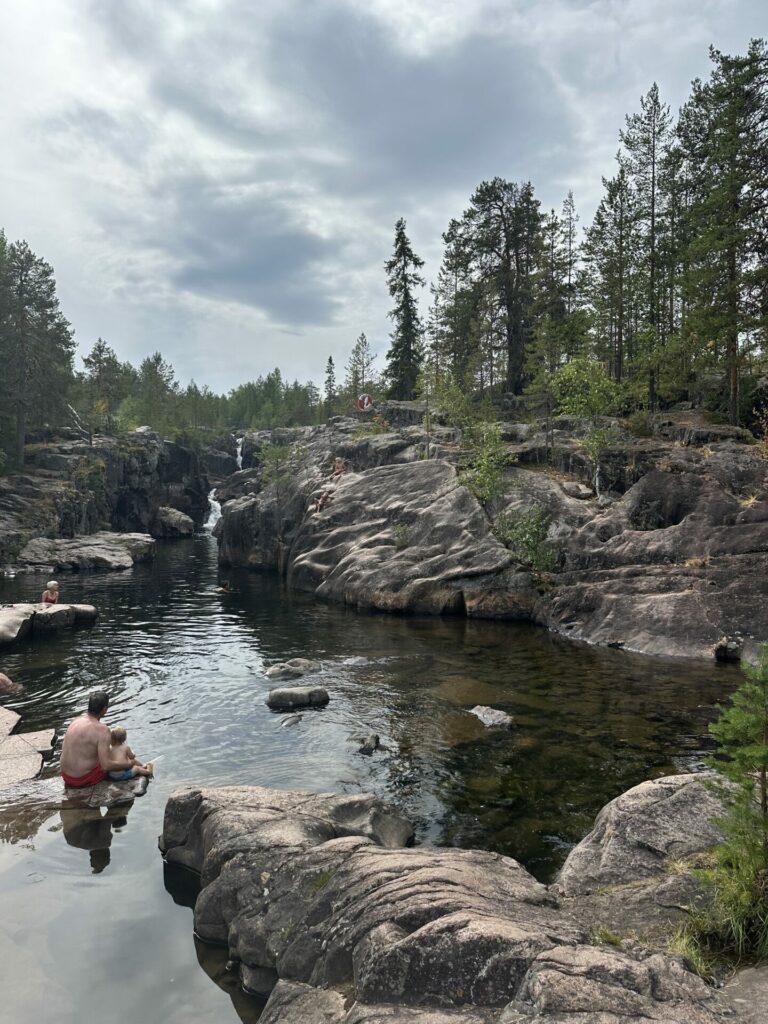
The site also has picnic areas and spots where you can simply sit facing the rapids and take in the view. It’s the kind of place where you plan to stay an hour… and end up spending half a day without noticing. And bring your swimsuit! Don’t worry — you won’t be swimming in the rapids! But further along, the river has formed many natural pools where swimming is permitted, as long as you don’t mind the cold…
For us, Storforsen is clearly one of the must-sees of any road trip in northern Sweden.
Gammelstad: a journey into Sweden’s past
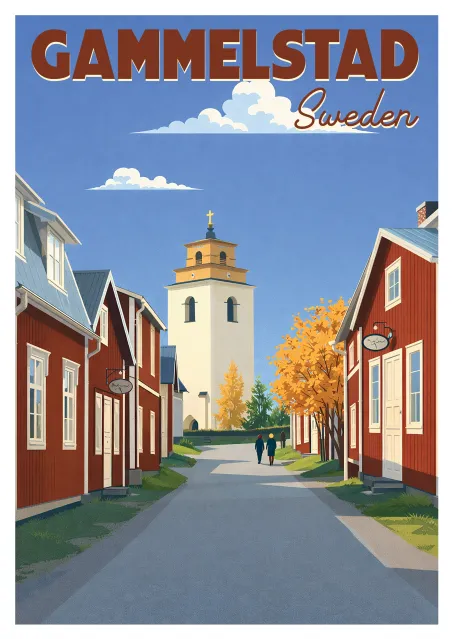
Among all the stops on our Swedish road trip, Gammelstad is probably the most culturally transporting. Located near the city of Luleå, in the north of the country, this UNESCO World Heritage village offers a glimpse into a far more historical and traditional side of Sweden.
From the moment you arrive, you feel as though you’ve stepped back several centuries. Gammelstad is what’s known as a “church town”, a type of village that was once very common across the north of Scandinavia. In those days, inhabitants often lived far from their churches and had to travel long distances to attend religious services or major gatherings. Small houses were therefore built around the church so that families could sleep there for several days.
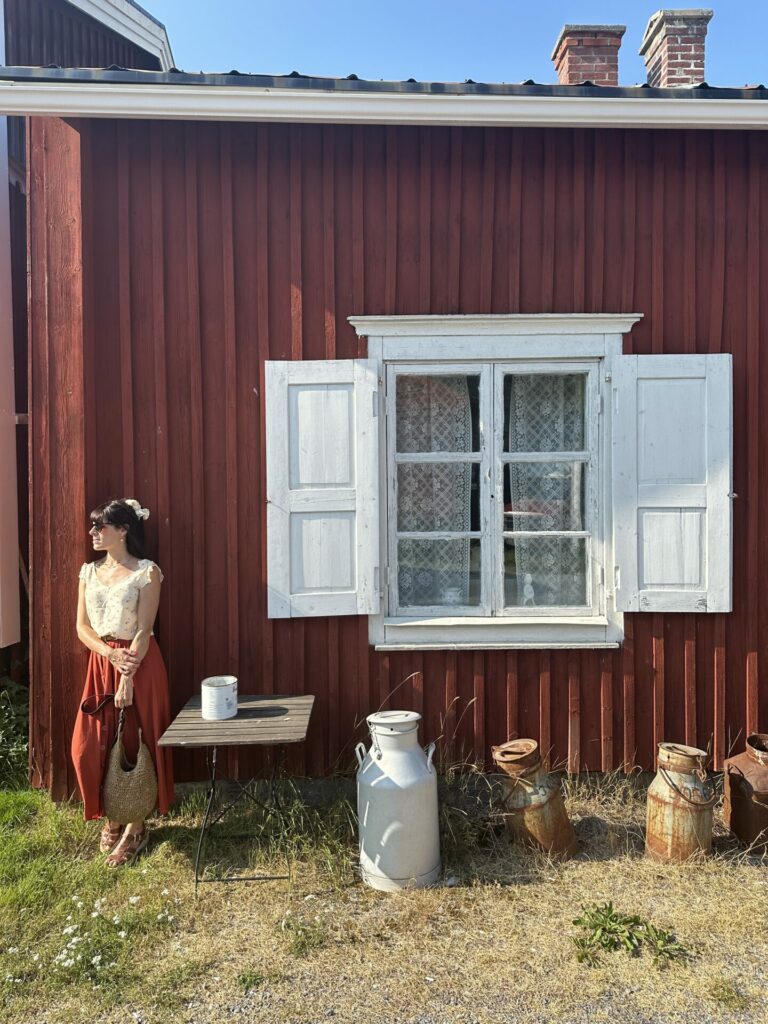
Today, the village still has hundreds of perfectly preserved small red wooden houses, lined up along narrow, charming alleyways. The whole setting is stunning and the atmosphere very peaceful. You wander quietly between the houses with a real sense of being in an ancient, authentic Sweden.
At the centre of the village stands the great medieval church of Nederluleå, which dominates the entire site. Its interior is also worth a visit, particularly to discover its architecture and history. But what truly makes Gammelstad unique is the surrounding village, which has remained almost completely intact over time.
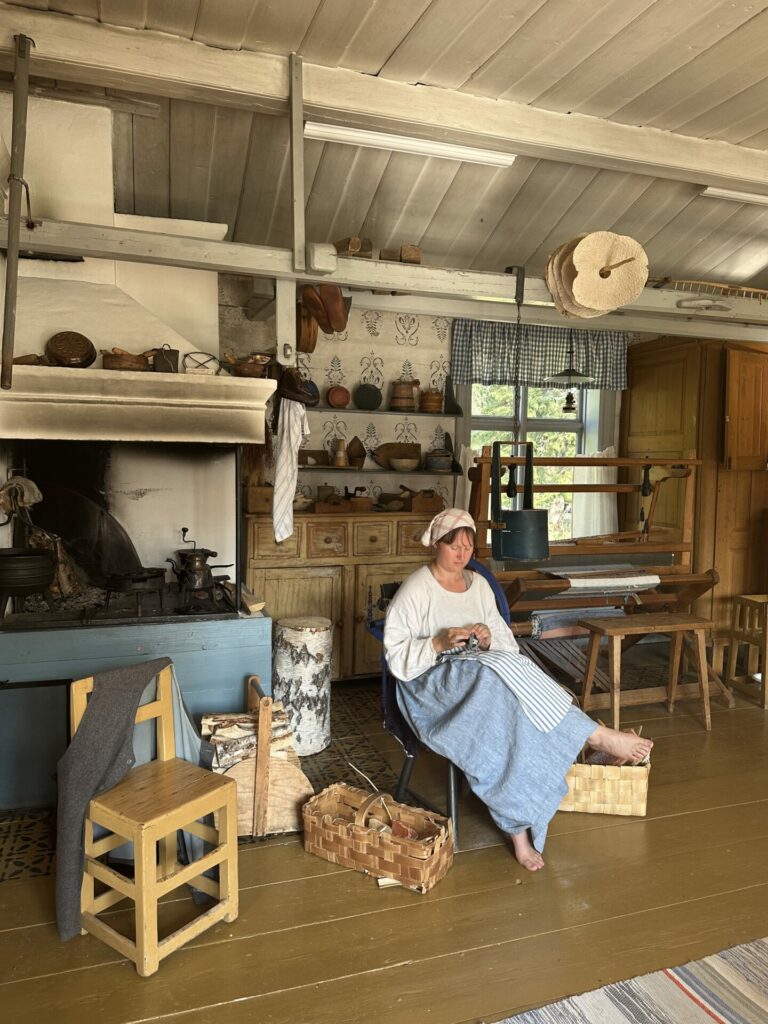
Depending on when you visit, you may also be able to watch historical re-enactments with performers in traditional costume. This was something we particularly enjoyed, as it really brings the village to life and helps you understand what daily life was like here in the past. Between traditional crafts, scenes from everyday life and demonstrations, you easily slip into the atmosphere of Sweden as it once was.
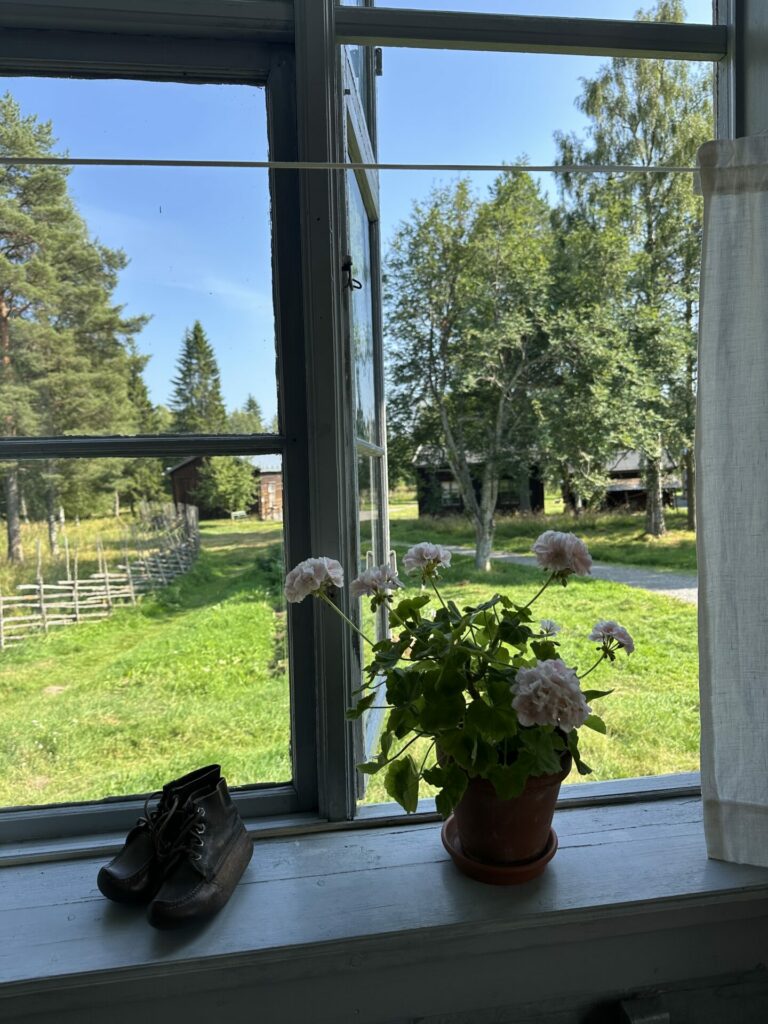
Some of the village’s residents open their doors and offer free, enthusiastic tours of the interiors — kept as if frozen in time. With genuine passion, they’ll recount the history of their ancestors and tell you about the harsh winter life in this part of the country.
There’s also an open-air museum section where — and this is quite remarkable — you can visit, entirely for free, several incredibly well-crafted historical reconstructions of homes, shops and farms! This open-air museum is filled with performers who bring the place to life, pulling you even deeper into the experience — we genuinely felt like we were there. We happily spent the entire day.
The Falun Mine: the impressive copper mine at the heart of Swedish history
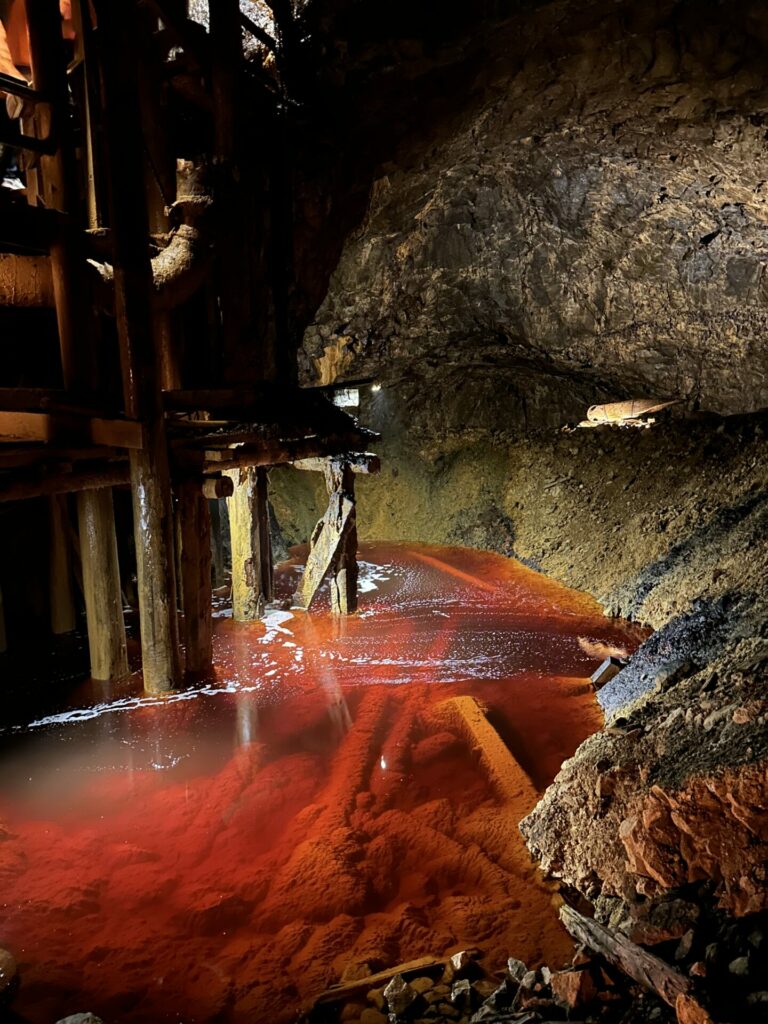
The Falun Mine is one of the most surprising visits we made in Sweden. Located in the city of Falun, this former copper mine is now a UNESCO World Heritage Site and a landmark of the country’s industrial history.
Before our visit, we weren’t expecting to discover such an impressive site. From the moment you arrive, the enormous reddish crater at the centre of the mine immediately catches your eye. The colours of the soil, the old wooden mining structures and the almost surreal atmosphere of the place truly give you the feeling of exploring a set from another era.
For several centuries, the Falun Mine was one of the most important copper mines in the world. At its peak, it produced a large part of the copper used across Europe and played an enormous role in Sweden’s economic development. It is also where the famous red paint used on Swedish houses was born — “Falun red paint” — made from the pigment-rich mining residues. And since we had fallen in love with all those beautiful red houses, being at the very place where the famous paint originated, we simply had to make the most of it! We brought back a large tin of paint for our home — one of the perks of travelling by motorhome! Bringing a large tin of paint on a plane is considerably more complicated!
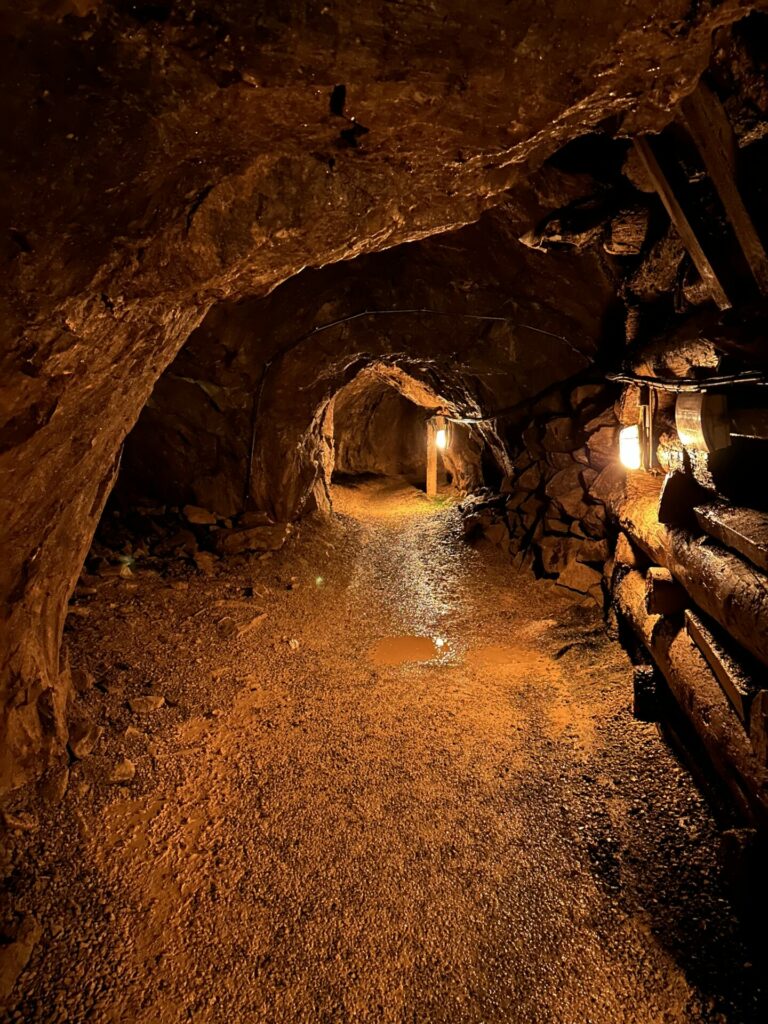
The visit includes a descent into the old underground galleries with a guide. And it’s clearly one of the most memorable parts of the experience. You discover tunnels carved into the rock, vast underground cavities, and the conditions in which miners worked in the past. The atmosphere underground is very particular: cool, dark and at times quite striking.
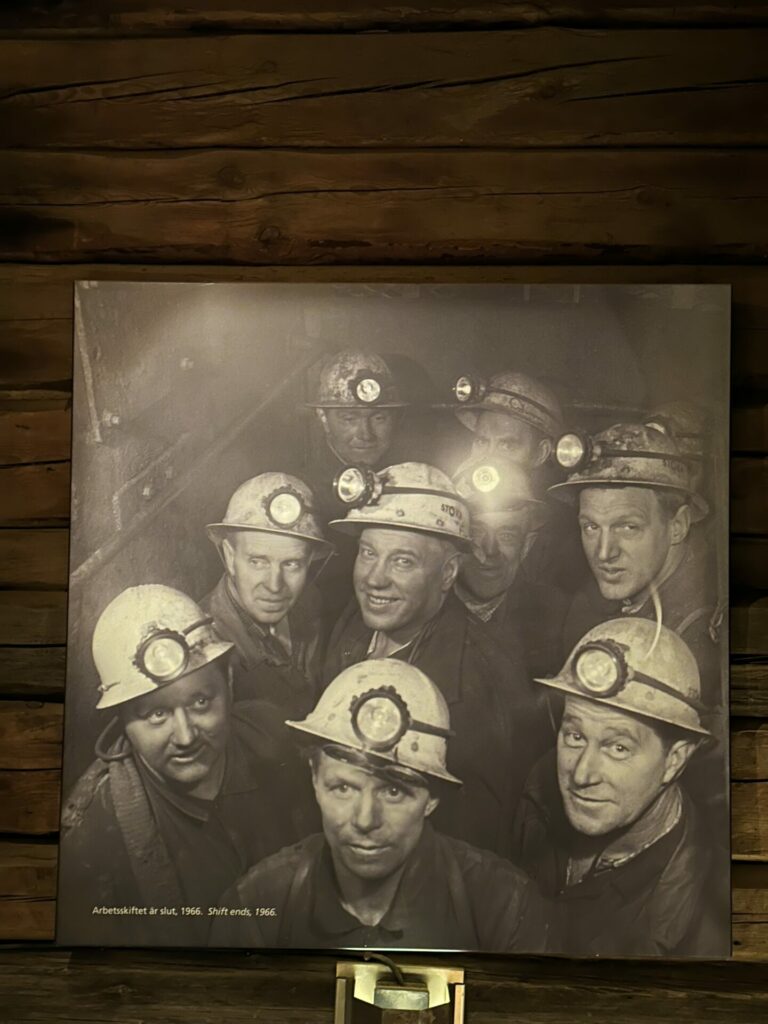
Throughout the tour, you learn an enormous amount about the history of the mine, the extraction techniques used at the time, and the extremely difficult lives of the workers. Some of the anecdotes shared during the visit really drive home the scale of the work carried out here over centuries.
The site also includes several historic buildings, exhibitions and a museum that allow you to extend your visit. Even without a passion for industrial history, the visit remains truly captivating thanks to the spectacular nature of the site. The children particularly loved it! The mine is just so immense — you can’t help but be left speechless. It really is incredibly impressive.
Scandinavia is full of wonders to discover! If you’d like to continue the adventure across the border, also check out our 4 gems on the fjord route in Norway and our favourite spots in southern Norway.
And if, like us, you still crave wide open spaces after Scandinavia, find out how to plan a road trip in Scotland.